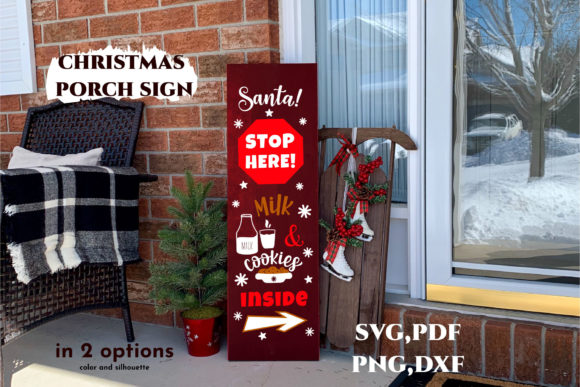
Christmas Porch Sign SVG: Santa Stop — Graphics for Crafts & Seasonal Branding
As a graphic designer who’s built brand identities for over a dozen handmade businesses—from Etsy shops launching holiday collections to local boutiques running Christmas pop-ups—I recently evaluated the Christmas Porch Sign SVG. Santa Stop for a real client project: a small-batch cookie company preparing its first branded holiday packaging and social campaign. My goal wasn’t just to see if it “looks festive”—it was to determine whether this graphic design asset could elevate visual storytelling, reinforce brand warmth, and hold up across print, digital, and physical touchpoints without compromising professionalism.
A First Impression That Feels Like Home
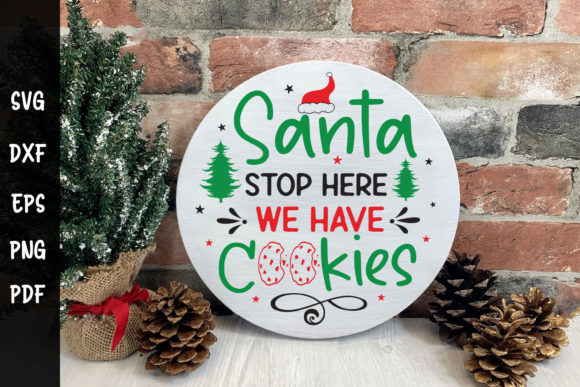
The Christmas Porch Sign SVG. Santa Stop delivers immediate emotional resonance. It reads as warm, approachable, and intentionally nostalgic—not kitschy or generic. The composition centers on a classic porch sign silhouette with clean outlines, balanced negative space, and a playful yet legible script for “Santa stop here”—followed by the charming, conversational tagline “Milk and cookies inside.” There’s no clutter, no excessive ornamentation, and crucially, no visual competition between elements. That makes it function well as both a standalone decorative accent and a flexible anchor in broader creative design.
Where This SVG Shines in Real Client Work
In practice, this Christmas Porch Sign SVG. Santa Stop excels where personality and seasonal charm matter most:
- Packaging design—It scales beautifully on cookie tins, gift boxes, and reusable tote bags, adding instant holiday context without overwhelming product photography.
- Social media graphics—Used as a hero element in Instagram carousels or Pinterest pins, it boosts engagement through familiarity and joyful recognition (especially when paired with real-life photos of decorated porches or storefronts).
- Printable design—As part of a coordinated set (think calendars, greeting cards, or invitation suites), it anchors a cohesive visual language. Its vector format ensures crisp output at any size—from 4×6 postcards to 24×36 posters.
- Cricut project & sublimation design—The clean cut lines and open interior spaces make it highly reliable for vinyl application and heat-transfer work on mugs, shirts, and ornaments.
- Brand identity support—While not a logo itself, it functions powerfully as a secondary brand element for small business branding—particularly for handmade businesses leaning into cozy, community-driven storytelling.
Contexts That Demand Careful Integration
This isn’t a universal-fit asset—and that’s a strength, not a limitation. Designers should pause before using Christmas Porch Sign SVG. Santa Stop in:
- Minimalist or high-end luxury branding, where restraint and typographic precision dominate—its friendly informality may dilute perceived premium value.
- Small-scale applications like app icons or favicon-sized assets—fine details in the script font and subtle sign texture can blur or disappear below 100px width.
- Complex backgrounds (e.g., busy pattern overlays or photo collages)—without careful masking or contrast adjustment, readability suffers.
- Corporate or institutional holiday campaigns—its handmade, residential tone doesn’t translate naturally to formal B2B messaging or government-sponsored events.
Design Performance Beyond Aesthetics
What makes Christmas Porch Sign SVG. Santa Stop more than just clipart is how it supports core design principles:
It strengthens visual hierarchy by acting as an instant focal point—viewers land there first, then read supporting copy. It builds emotional appeal through familiar, story-driven phrasing (“Milk and cookies inside”) that triggers positive memory associations. And because it’s rooted in domestic ritual rather than commercial tropes, it enhances visual trust—customers perceive authenticity, not algorithmic trend-chasing.
For marketers and content creators, it also improves audience engagement. On Instagram, posts featuring this SVG alongside user-generated content (e.g., “Tag us with your Santa Stop sign!”) see higher shares and saves. For bloggers and publishers covering holiday crafts or small business tips, it serves as versatile editorial design—ideal for headers, section dividers, or printable checklists.
Practical Designer Notes Before Deployment
Before clearing Christmas Porch Sign SVG. Santa Stop for client use, I always run these checks:
- Test it in black and white—does the script remain legible? (Yes—it holds up well.)
- Preview on light and dark backgrounds—verify contrast ratios meet WCAG AA standards for accessibility in digital ads or web banners.
- Scale it down to 72px and up to 2000px—confirm no stroke collapse or kerning issues in the SVG paths.
- Drop it into realistic product mockups—tote bag, ceramic mug, porch banner—to assess proportion and presence.
- Print a test sheet on uncoated and glossy stock—check ink spread and edge sharpness.
- Inspect included file formats—if PNGs are bundled, verify transparent background integrity; if EPS or AI versions exist, confirm vector editability for customizing colors or spacing.
- Compare font pairings—this SVG pairs best with warm sans serifs (like Poppins Light) or gentle serifs (like Cormorant Garamond) for supporting text—not stark monospaced or ultra-thin display fonts.
- Confirm commercial license terms—essential for print-on-demand sellers, Canva template creators, or anyone reselling derivative digital products.
A Strategic Asset, Not Just Seasonal Decor
Ultimately, Christmas Porch Sign SVG. Santa Stop is more than a festive graphic—it’s a functional piece of commercial design. When used intentionally, it bridges the gap between craft and commerce: supporting Etsy product listings with authentic charm, elevating packaging for small-batch makers, and giving digital sellers a polished, ready-to-deploy element for holiday-themed Canva templates or Cricut project bundles.
For designers building seasonal campaigns—or creatives sourcing reliable design assets from the wider creative marketplace—this SVG earns its place not because it’s trendy, but because it’s thoughtfully constructed: scalable, expressive, licensable, and emotionally intelligent. In a sea of generic snowflakes and glittery fonts, it stands out by feeling like home.